1. Product Story & Unique Selling Points
Adding electronics to skincare packaging introduces new selection criteria. Beyond appearance and formula delivery, buyers need to understand the operating mode, power requirements, cleaning method and how the electronic assembly fits into their filling process.
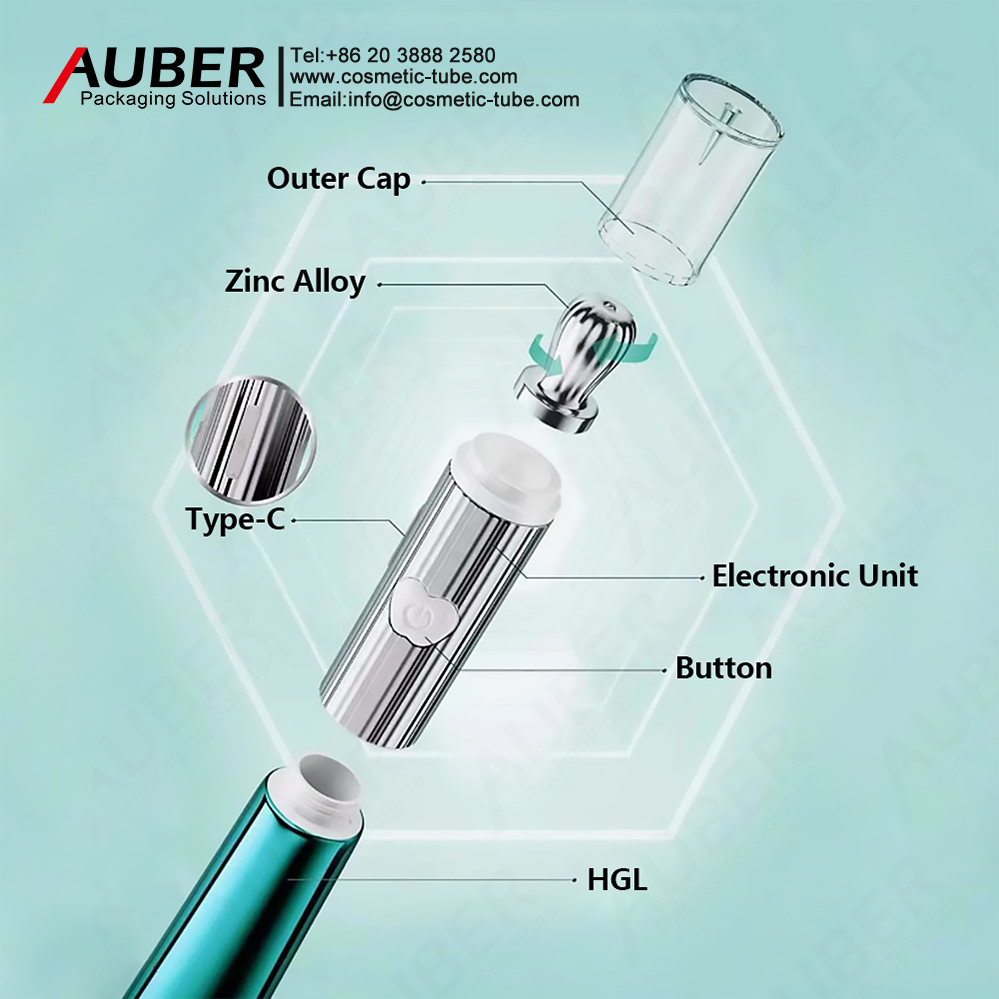
This design brings a zinc alloy applicator, an electronic unit and a squeeze tube into one format. A visible button provides the control interface, while the Type-C connection forms part of the electronic module. The transparent overcap covers the applicator between uses.
2. Technical Specifications
Item | Details |
|---|---|
Model No. | TBC |
Material | Zinc alloy applicator; tube body, electronic housing and overcap materials: TBC |
Capacity | TBC |
Tube diameter | TBC |
Applicator & orifice | Zinc alloy applicator with electronic unit, control button and Type-C interface; operating mode and dispensing structure: TBC |
Cap type | Transparent protective overcap |
Decoration & finish | Offset printing, silk screen, hot stamping, labeling, matte or glossy finish; processes depend on the selected tube construction |
Custom options | Tube length, capacity, color, printing and packaging |
MOQ | 10,000 pcs/SKU; 5,000 pcs negotiable at a higher unit price |
Lead time | Samples: approx. 7 working days; mass production: approx. 30 days after approval |
3. Application Scenarios
Potential projects for evaluation include:
Eye care treatments
Targeted facial serums and gels
Applicator-led skincare collections
At-home beauty routines
Skincare gift sets with an electronic application feature
Final suitability depends on the confirmed electronic function, intended application area, formula compatibility and dispensing performance.
4. Customization Capabilities
Tube: Adjust tube length and target capacity to suit the product format.
Color: Coordinate the tube body with your brand palette.
Decoration: Add logos, product graphics and instructions through suitable tube printing or labeling methods.
Surface Finish: Review matte or glossy tube finishes alongside the electronic housing.
Applicator Configuration: Establish the operating mode, formula-delivery structure and user controls before approval.
Packaging: Plan retail packaging with space for operating instructions and any required accessories.
5. Quality Control
The approval plan should cover both packaging performance and the electronic assembly:
Material Verification: Confirm the zinc alloy grade, surface treatment and all formula-contact materials.
Formula Compatibility: Evaluate the finished formula against the complete dispensing and applicator assembly.
Electronic Operation: Verify button response, operating behavior and consistency against the approved specification.
Type-C Interface: Confirm the interface function and applicable electrical requirements.
Sealing & Isolation: Assess leakage and protection of the electronic unit from formula ingress.
Assembly & Handling: Check component retention, overcap fit and comfort during intended use.
Instructions: Establish operating, cleaning, storage and charging instructions where applicable.
6. Packaging & Shipping
Component Protection: Protect the zinc alloy head, electronic housing and decorated tube surfaces during transit.
Retail Presentation: Coordinate the tube, instructions and any included accessories within the retail pack.
Power-System Review: Confirm the power source and any battery-related packing or transport requirements before shipment.
Export Packing: Establish carton quantities and dimensions around the approved configuration.
Delivery Planning: Include the destination and required arrival date when requesting a project quotation.
7. Frequently Asked Questions (FAQ)
Q: What electronic function does the applicator provide?
A: The image identifies an electronic unit and control button but does not specify the operating mode. Confirm whether the selected configuration provides rotation, vibration or another function before finalizing product claims.
Q: Is the applicator made of zinc alloy?
A: Yes. The supplied image identifies the applicator as zinc alloy. Confirm its exact grade and surface treatment for the project.
Q: Is the product rechargeable through Type-C?
A: A Type-C interface is shown. Rechargeable operation, battery specification, charging requirements and any included cable should be confirmed with the selected configuration.
Q: How does the formula reach the applicator?
A: The dispensing path is not established by the image. Review the outlet structure and evaluate delivery using the intended formula.
Q: Can the electronic unit be reused with replacement tubes?
A: The exploded view shows separate components, but it does not establish a consumer refill system. Reuse, replacement compatibility and assembly durability require confirmation.
Q: Can the applicator be washed under running water?
A: Water resistance has not been specified. Cleaning instructions must reflect the confirmed construction and protection of the electronic unit.
Q: Does the electronic function improve absorption or skincare results?
A: Such claims require evidence for the finished product and intended use. The presence of an electronic applicator alone does not establish a skincare benefit.
Q: What are the MOQ and lead times?
A: The standard MOQ is 10,000 pcs/SKU; 5,000 pcs may be negotiated at a higher unit price. Samples take approximately 7 working days, and mass production takes approximately 30 days after approval.
Send Message
Related Products