


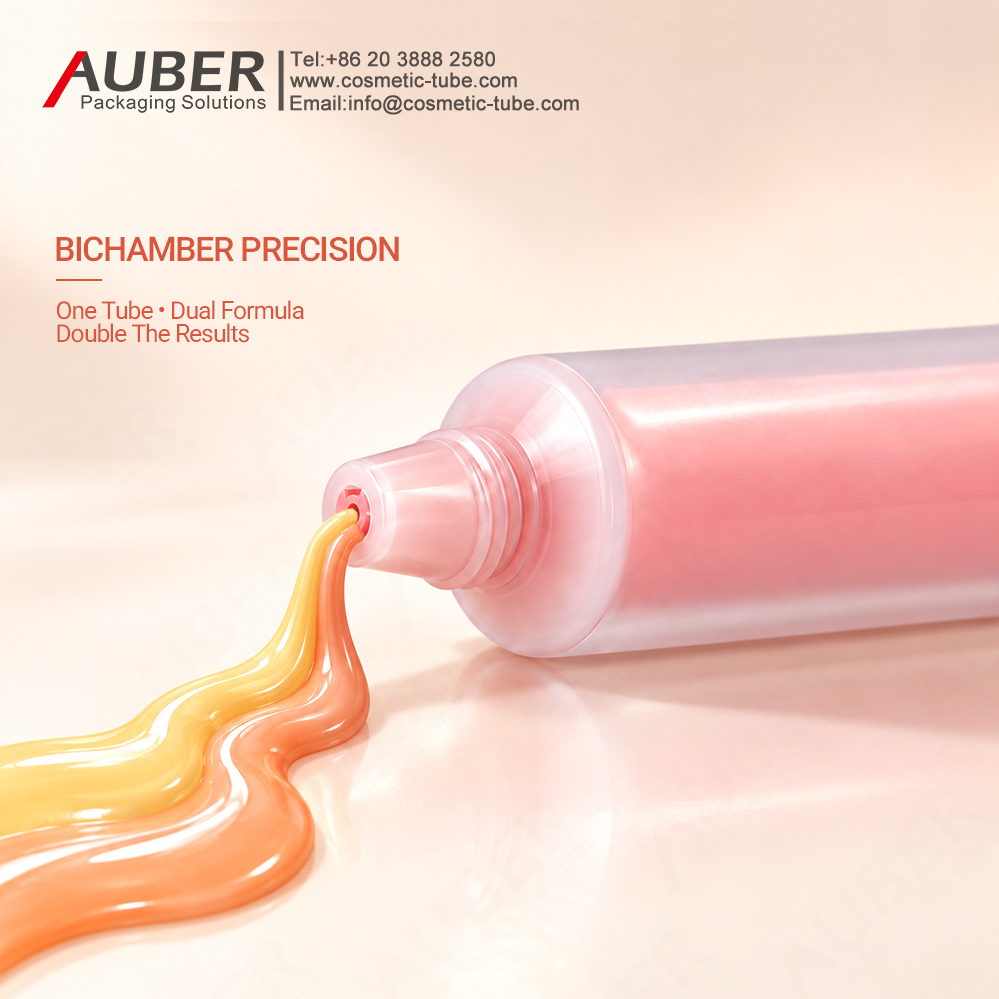
1. Product Story & Unique Selling Points
This packaging concept is suitable for products that combine different textures, colors or functional formulas, such as serum and cream, gel and lotion, or two complementary skincare treatments. The visible two-color dispensing effect can also become part of the consumer experience and help communicate a dual-action product concept.
Compared with using two individual packages, a dual chamber tube can create a more integrated presentation while keeping the product format convenient for daily use and travel.
With customizable tube colors, artwork, decoration and structural specifications, this format provides beauty brands with a distinctive option for developing dual-formula skincare, haircare and personal-care products.
2. Technical Specifications
| Item | Details |
|---|---|
| Material | PE / ABL / PBL/PCR available |
| Capacity | 5ml‑250ml available |
| Tube diameter | 19mm /22mm /25mm /30mm /35mm /40mm /50mm |
| Surface finish | Matte / glossy / soft‑touch / metallic lamination |
| Cap type | Flip top, screw cap, octagonal cap, star orifice, roller ball cap |
| Custom options | Tube, applicator head, cap, color, printing, packaging |
| MOQ | Existing mold: 5,000 pcs/SKU; Custom new mold: 10,000‑30,000 pcs |
| Sample time | 7‑12 working days for existing samples |
| Mass production | 22‑30 working days after sample confirmation |
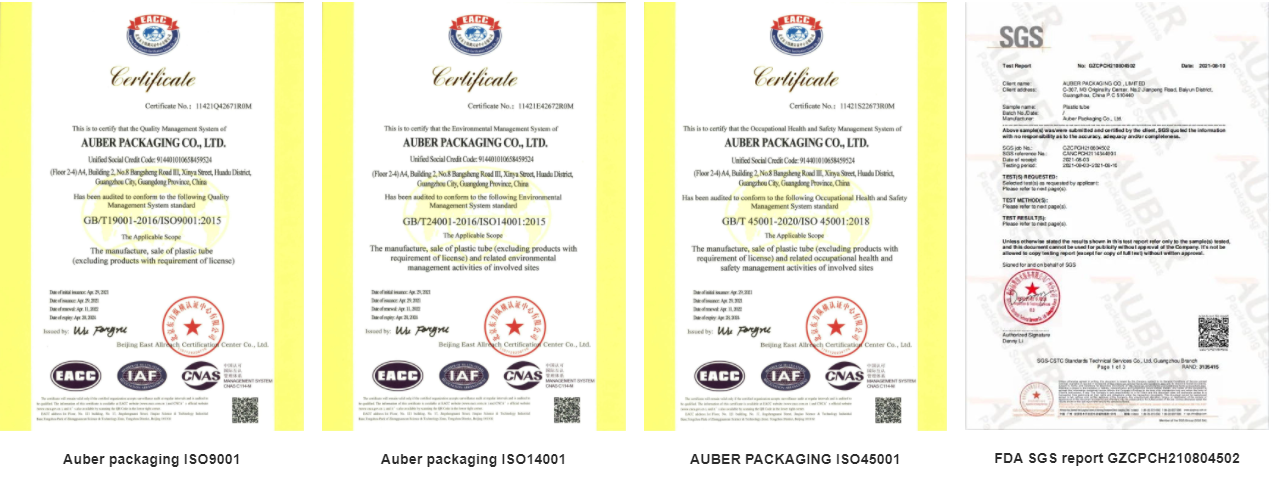
| Certifications | ISO14001, ISO45001, ISO9001, and FDA Certified manufacturer since 2004 |
| Target markets | EU, North America, Latin America, Middle East |
3. Application Scenarios
- Serum and cream combinations
- Gel and lotion formulations
- Day-and-night skincare concepts
- Dual-action facial treatments
- Moisturizing and active-treatment combinations
- Hair treatment and conditioner combinations
- Scalp care and haircare formulas
- Body care products with complementary formulas
- Two-color cosmetic formulations
- Premium travel and multifunctional beauty products
4. Customization Capabilities
- Tube: Custom diameter, length, capacity, and shape
- Applicator Head: Precision tip, metal applicator, silicone massage head, and other customized designs
- Cap: Screw cap, plug cap, flip-top cap, and customized cap structures
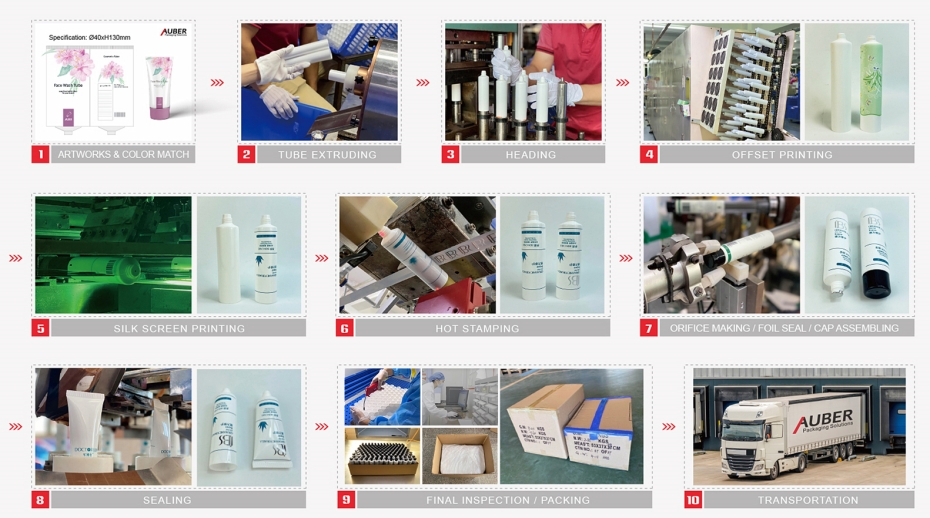
- Decoration: Offset printing, silk screen, hot stamping, UV coating, and matte/gloss finishes
- Color: Custom Pantone colors and metallic finishes
- Packaging: Individual box, paper sleeve, blister, gift set, and other retail-ready packaging
- Accessories: Spatula, roller head, massage head, brush applicator, and other application components
5. Quality Control
- Raw Material Inspection: Resin, pigment, applicator and component verification
- In-Process QC: Wall thickness, printing adhesion, sealing performance and assembly inspection
- Functional Testing: Leak testing and applicator performance testing
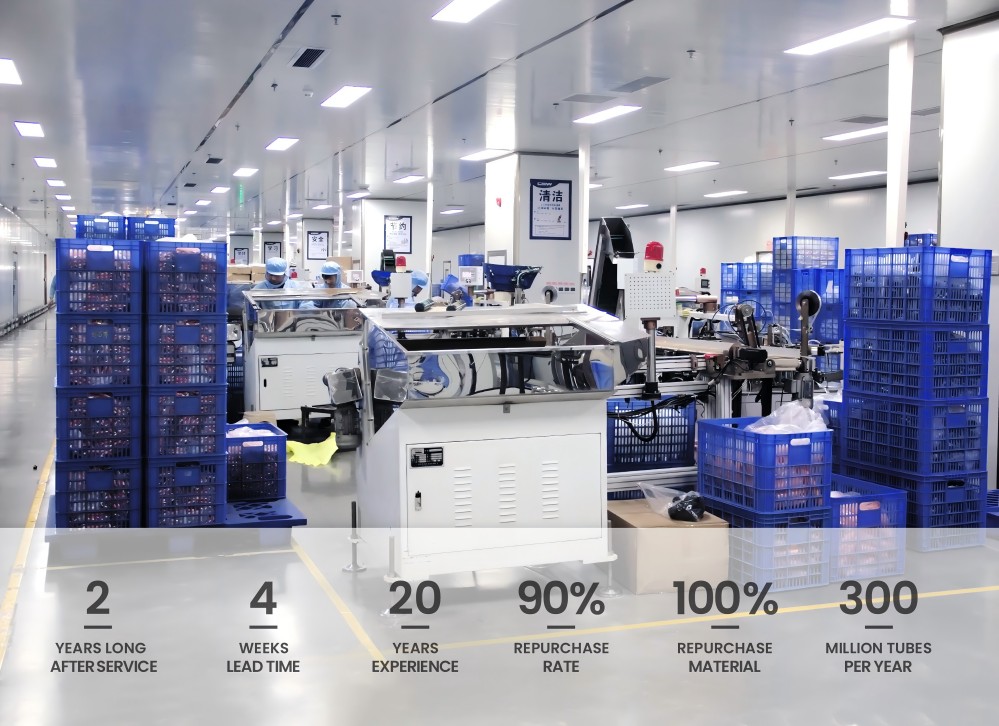
- Final Inspection: AQL 2.5 Level II sampling inspection
- Third-Party Inspection: SGS, BV or Intertek inspection available upon request
- In-House Testing: Torque testing, thickness measurement, leak testing and appearance inspection
- Unit: Individual PP bag, blister or customized retail packaging.
- Export carton: 5‑ply corrugated carton. Carton packing quantity varies according to tube dimensions.
- Pallet loading: Pallets with shrink‑wrapping are available for sea shipment.
- Container loading: Loading quantity based on tube size, capacity and packaging configuration.
- Trade terms: FOB Guangzhou / Shenzhen,CFR,CIF,DDP,DAP,EXW.
- Global Shipping: Support for US, EU, Middle East, Southeast Asia and other markets.
7. Frequently Asked Questions (FAQ)
Q: What is a dual chamber cosmetic tube?
A: A dual chamber cosmetic tube contains two separate internal compartments within one tube body. Each chamber can hold a different formula, allowing the products to remain separated before dispensing.
Q: Can the two formulas be dispensed at the same time?
A: The dispensing structure can be designed to release formulas from both chambers during use. The final dispensing ratio and performance depend on the chamber structure, outlet design and formula characteristics.
Q: Why use two chambers instead of mixing the formulas together?
A: Some products use formulas with different textures, colors or functional ingredients that are intended to remain separate before application. A dual chamber structure can support this type of product concept, subject to compatibility and stability testing.
Q: What types of formulas can be used?
A: Potential combinations include serum and cream, gel and lotion, two skincare treatments, haircare formulas and other complementary products. Final suitability depends on viscosity, chemical compatibility and dispensing performance.
Q: Can the two chambers have different capacities?
A: Chamber volume distribution may be discussed according to the product concept and available tube structure. Feasibility should be confirmed during technical development.
Q: Can the formulas have different colors?
A: Yes. Different formula colors may be used to create a visible dual-formula dispensing effect, provided the formulas are compatible with the selected packaging materials and dispensing structure.
Q: Can the tube body be customized?
A: Tube colors, dimensions, artwork, printing and surface finishes can be discussed according to project requirements and production feasibility.
Q: What decoration methods are available?
A: Available options may include offset printing, silk-screen printing, hot stamping and other decoration methods depending on the selected tube material and surface finish.
Q: How do you test whether the two formulas dispense evenly?
A: Filled samples should be tested using the intended formulas. Dispensing performance depends on factors such as viscosity, chamber ratio, outlet size and applied squeezing force.
Q: Is formula compatibility testing necessary?
A: Yes. Compatibility testing is recommended because formula composition can affect the tube material, chamber structure and dispensing performance.
Q: What is the minimum order quantity?
A: MOQ depends on the selected dual chamber structure, tube specification, decoration and customization requirements. Contact Auber with your target configuration for confirmation.
Q: Can I request samples before mass production?
A: Yes. Sample availability and custom sampling requirements can be discussed with the Auber team. Testing with the intended formulas is recommended before confirming mass production.
Q: Can Auber customize the dispensing ratio between the two formulas?
A: The chamber configuration and outlet design can be reviewed according to the desired product concept. The achievable dispensing ratio should be confirmed through structural review and sample testing.
Send Message
Related Products


