

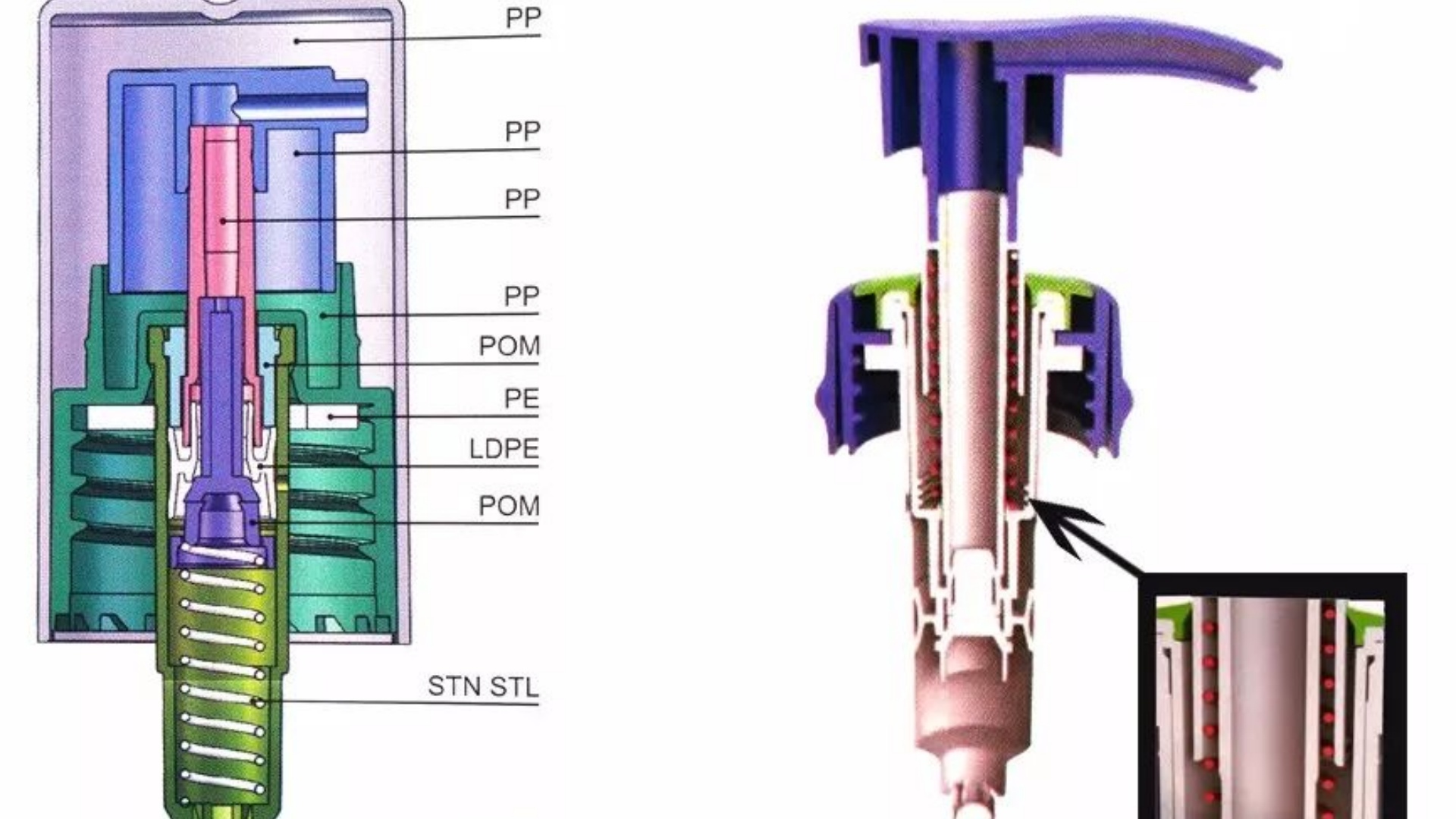
1. Know Where Pumps Are Used
Pumps are widely used across beauty and personal care products, including:
- Skincare & Bodycare: lotions, serums, sunscreens
- Hair & Wash-off: shampoo, conditioner, body wash
- Hand & Facial Care: hand wash, cleanser
- Different formulations demand different pump designs for smooth dispensing and reliable functionality.
2. Supplier & Product Selection
- Choose Reliable Suppliers: Select partners with proven experience, quality certifications, and stable production capacity. A good supplier protects your formula and maintains consistent quality.
- Ensure Compatibility: Match pump neck size, sealing performance, and material compatibility with your container and formulation. This prevents leaks and performance issues.
- Evaluate Supply Chain Stability: Check lead times and stock strategy to avoid production delays and excess inventory. A stable supplier is key to smooth operations
3. Understand Cost Structure
- Effective procurement requires awareness of major cost components:
- Material Cost: plastics, elastomers, metals — quality impacts durability.
- Manufacturing Cost: tooling, molding, assembly, and testing.
- Packaging & Logistics: protective packing and freight to your plant.
- Knowing cost drivers helps negotiate better pricing without compromising quality.
4. Quality Control Essentials
To ensure high performance from your pump for cosmetic packaging, focus on:
✔ Raw Material Quality
Verify material safety, chemical resistance, and standards compliance.
Verify material safety, chemical resistance, and standards compliance.
✔ Manufacturing Precision
Maintain tight control over molds, injection parameters, and assembly processes.
Maintain tight control over molds, injection parameters, and assembly processes.
✔ Functional Testing
Test pumps for dosage accuracy, seal integrity, and durability before mass purchase.
Test pumps for dosage accuracy, seal integrity, and durability before mass purchase.
✔ Quality Management
Establish clear inspection criteria and quality checkpoints with your supplier.
Establish clear inspection criteria and quality checkpoints with your supplier.
Wrap-Up
Efficiently sourcing pump for cosmetic packaging requires clear application understanding, strong supplier evaluation, cost awareness, and strict quality control. Following these practical tips helps ensure your products perform as intended—and delight your customers.
For tailored procurement guidance or sample testing strategies, Auber is ready to support your packaging success.


