

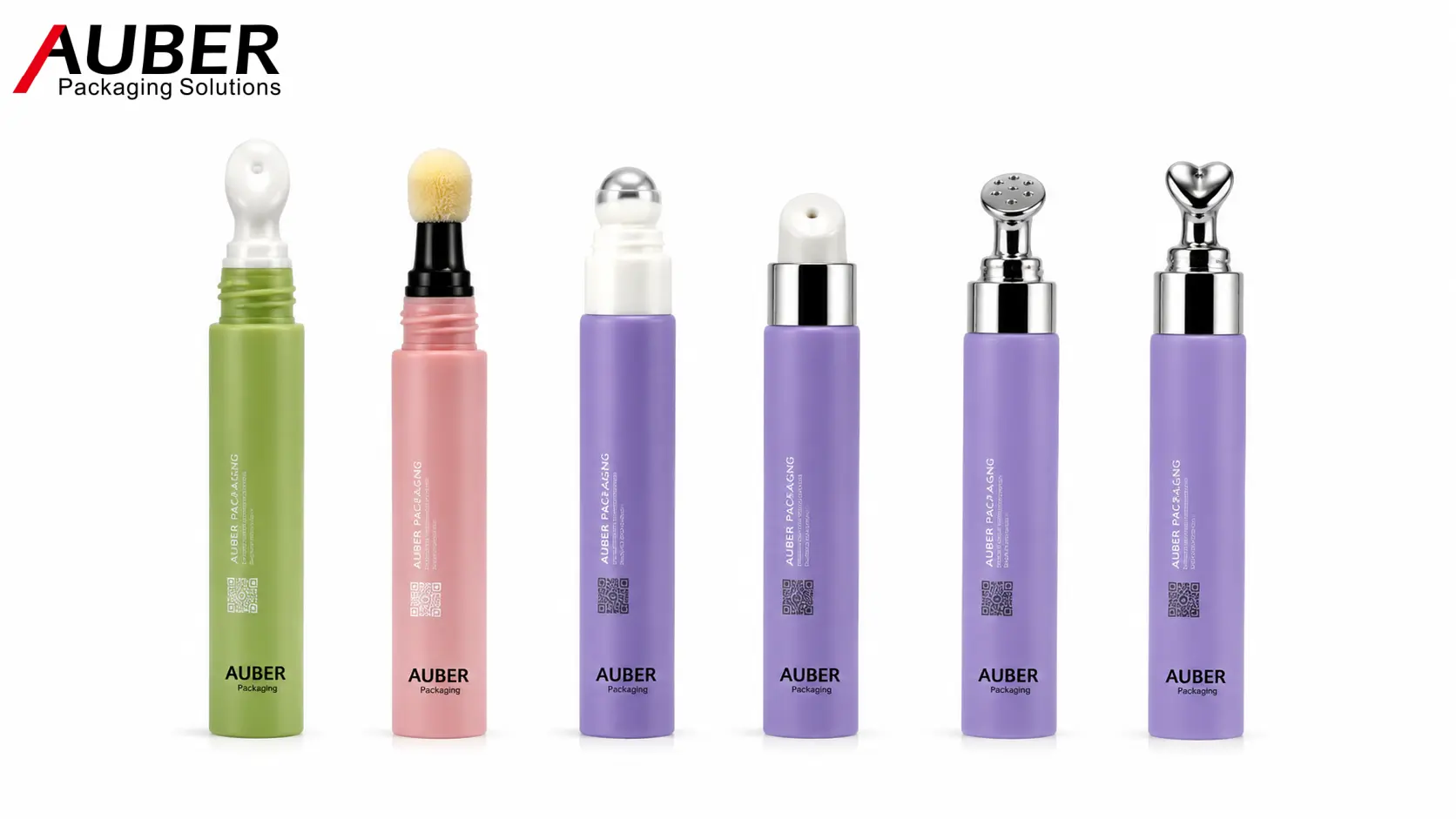
A good applicator can make a gloss feel smoother, more precise, more hygienic, or more premium. A poor applicator can cause leaking, uneven pickup, messy application, or a product experience that does not match the brand promise.
If you are developing a lip gloss, lip oil, lip treatment, plumping gloss, tinted balm, or hybrid lip product, the applicator should be selected together with the formula and tube structure. This guide compares common lip gloss tube applicator options, including doe foot, silicone, metal tip, sponge, brush, and wand applicators.
Why the Applicator Matters in Lip Gloss Packaging
The applicator controls three important parts of the user experience:
- Pickup: How much formula the applicator carries each time it is pulled out.
- Application: How smoothly and precisely the formula spreads on the lips.
- Perception: Whether the product feels mass-market, clean beauty, clinical, playful, or premium.
For B2B buyers, the applicator also affects filling compatibility, leakage control, assembly cost, MOQ, decoration options, and lead time. This is why applicator selection should happen early in the packaging development process.
Quick Comparison
|
Applicator type |
Best for |
Main benefit |
Watch out for |
|
Doe foot applicator |
Classic lip gloss, lip oil, tinted gloss |
Familiar, soft, good formula pickup |
Needs correct wiper control |
|
Silicone applicator |
Clean beauty, lip care, skincare-lip hybrids |
Easy to clean, smooth, modern look |
Pickup can be lower than flocked tips |
|
Metal tip applicator |
Premium lip care, cooling lip treatment |
Cooling feel, precise, premium |
Higher cost and structure matching |
|
Sponge tip applicator |
Soft lip color and balm-like textures |
Comfortable, gentle, easy to use |
May absorb more formula |
|
Brush applicator |
Thinner gloss, precise lip products |
Flexible, detailed application |
Less ideal for very thick formulas |
|
Wand applicator |
Standard bottle-style gloss |
Simple, proven, widely accepted |
Differentiation depends on tip design |
How to Choose the Right Lip Gloss Applicator
Here is a practical selection process for beauty brands:
1. Start with formula viscosity
Thicker formulas usually need an applicator with enough pickup and spreading power. Thinner formulas may need better wiper control to avoid dripping or mess.
2. Define the product experience
Ask what the customer should feel:
- Soft and familiar?
- Clean and modern?
- Cooling and premium?
- Precise and technical?
- Playful and social-media friendly?
The applicator should support that experience.
3. Match the applicator with tube structure
Applicator choice affects the neck, wiper, cap, sealing, and filling process. It should not be chosen in isolation.
4. Test real usage
Before approving the final packaging, test the applicator with the actual formula. Check application, pickup, leakage, cap closure, storage, and transport.
5. Consider content and marketing
Applicators are highly visual. A metal tip, silicone tip, or unique doe foot shape can become a strong visual asset for Instagram, TikTok, Pinterest, and product detail pages.
Applicator Selection by Brand Positioning
|
Brand positioning |
Recommended applicator direction |
|
Mass beauty |
Doe foot, wand |
|
Clean beauty |
Silicone, simple wand |
|
Premium lip care |
Metal tip, silicone tip |
|
Fun indie beauty |
Unique doe foot, colorful tube, charms/keychains |
|
Clinical lip treatment |
Metal tip, precise silicone tip |
|
Fast launch / stock packaging |
Standard doe foot or wand |
Questions to Ask Your Packaging Supplier
Before choosing a lip gloss tube applicator, ask your supplier:
- Which applicator options are compatible with my formula viscosity?
- Can the wiper be adjusted?
- What is the MOQ for this applicator structure?
- Can I customize the tube color, cap, decoration, or applicator shape?
- Can you provide samples for formula testing?
- Has this structure passed leakage or transport testing?
- What decoration options are available?
- What is the estimated lead time for sampling and mass production?
Final Recommendation
There is no single best lip gloss applicator for every product. A doe foot applicator is a safe and familiar choice. A silicone applicator can help create a clean and modern product experience. A metal tip applicator can make the product feel more premium and treatment-oriented.
The best choice depends on your formula, brand positioning, target market, budget, and launch timeline.
If you are developing custom lip gloss tubes, Auber can help you compare applicator options, test packaging compatibility, and build a tube structure that fits your product concept.
Need help choosing the right applicator?
Send us your formula type, fill volume, target market, and desired application feel. Our packaging team will recommend suitable lip gloss tube and applicator options for your project.
FAQ
What is the most common applicator for lip gloss tubes?
The doe foot applicator is one of the most common options because it is soft, familiar, and suitable for many lip gloss and lip oil formulas.
Is a silicone applicator better than a doe foot applicator?
Not always. Silicone applicators are easy to clean and look modern, but doe foot applicators usually provide a softer feel and stronger formula pickup. The better choice depends on the formula and product positioning.
What is a metal tip applicator used for?
A metal tip applicator is often used for cooling lip treatments, premium lip care products, and skincare-inspired formulas. It can create a cool-touch experience and a more premium appearance.
Can I customize the applicator for my lip gloss tube?
Many applicator elements can be customized depending on the structure, MOQ, and supplier capability. These may include tip type, tube body, cap, color, decoration, and sometimes applicator shape.
How do I know if an applicator matches my formula?
The best way is to test the applicator with your actual formula. Check pickup, spreading, leakage, wiper fit, pull-out feel, and storage performance.


