

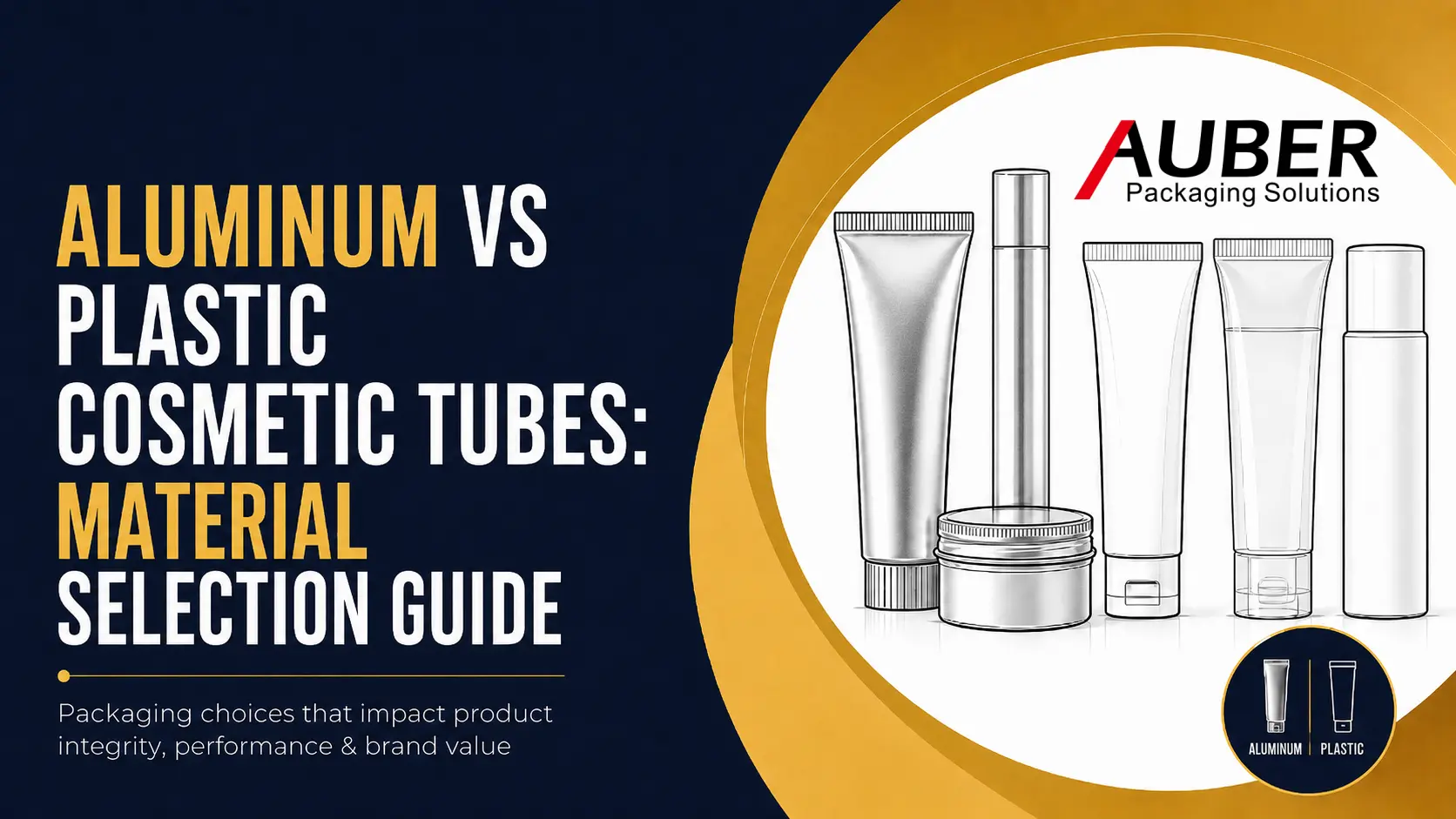
This choice is not merely aesthetic; it profoundly affects how formulations are protected, dispensed, and ultimately, how they perform on the market. At Auber Packaging, we understand that an informed decision requires a deep dive into material science and functional performance.
Understanding the Core Differences
The fundamental distinction between aluminum and plastic tubes lies in their material properties and structural integrity. Aluminum tubes, typically made from a single piece of aluminum, offer inherent rigidity and barrier protection. Plastic tubes, often extruded from polyethylene (PE) or polypropylene (PP), provide flexibility and can be engineered with multi-layer structures (like ABL or PBL) to enhance barrier properties.
Material Comparison Framework
To guide your selection, here's a structured comparison of aluminum and plastic cosmetic tubes across key criteria:
|
Feature |
Aluminum Tubes |
Plastic Tubes (PE/PP) |
|
Cost |
Generally higher initial cost |
Generally lower initial cost |
|
Weight |
Lighter than glass, heavier than thin plastic |
Lighter, contributing to reduced shipping costs |
|
Barrier Properties |
Excellent, near-absolute barrier against light, air, and moisture |
Good to excellent (especially multi-layer ABL/PBL), but can be permeable to some substances over time |
|
Recyclability |
Highly recyclable (infinite cycles) |
Recyclable (varies by plastic type and local infrastructure) |
|
Product Compatibility |
Excellent for sensitive, active, or volatile formulations |
Good for most formulations; specific barrier layers needed for sensitive products |
|
Durability |
Rigid, maintains shape, but can dent or crease |
Flexible, resilient, but can lose shape over time |
|
Aesthetics |
Premium, metallic finish, can be lacquered |
Versatile, wide range of colors, finishes, and transparency |
|
Dispensing |
Collapsible, minimal product residue |
Resilient, springs back, can leave some residue |
Applicable Product Scenarios
Aluminum Tubes are ideal for:
•Pharmaceutical Ointments & Creams: Their superior barrier protection prevents degradation of active ingredients and maintains sterility.
•Sensitive Skincare Products: Products containing antioxidants, retinoids, or vitamin C benefit from the complete protection against oxidation and light.
•Hair Dyes & Chemical Products: The inert nature of aluminum prevents interaction with aggressive formulations.
•High-End Cosmetics: The premium feel and appearance align with luxury brand positioning.
Plastic Tubes are ideal for:
•Everyday Skincare & Lotions: Cost-effective and versatile for less sensitive formulations.
•Shampoos & Conditioners: Their flexibility and durability are well-suited for shower environments.
•Sunscreen & Body Care: Easy to dispense and resilient to frequent handling.
•Travel-Size & Sample Products: Lightweight and less prone to damage during transit.
Practical Takeaways for Decision Making
•For maximum product protection and shelf life, especially for active or sensitive formulations, aluminum tubes are often the superior choice.
•For cost-effectiveness, lightweight design, and a wide range of aesthetic options, plastic tubes offer excellent versatility.
•Consider the product's viscosity and dispensing needs. Aluminum tubes collapse, ensuring minimal waste, while plastic tubes return to shape.
•Evaluate your brand's sustainability goals. Both materials are recyclable, but aluminum boasts an infinitely recyclable loop.
At Auber Packaging, we specialize in providing tailored tube packaging solutions. Understanding these material nuances is key to making a decision that safeguards your product and resonates with your brand values. Contact us to explore how our expertise can help you select the perfect tube for your next cosmetic innovation


